Production & logistics digitalization
MES and warehouse management system for a robotics manufacturer
A greenfield MES platform with integrated warehouse management for a manufacturer operating CNC machines, robotic cells, and multi-zone storage – covering production scheduling, real-time equipment monitoring, material traceability, and logistics automation.
The challenge
The client – a manufacturer working with CNC machines and robotic automation – managed production planning, shop floor execution, and warehouse operations through disconnected tools: spreadsheets, standalone ERP modules, and manual paper-based tracking. There was no unified view of what was happening on the floor, no reliable way to trace materials through production, and scheduling was reactive rather than optimized.
They needed a single system that connects production scheduling with real-time machine data and warehouse inventory – while integrating cleanly with their existing ERP and being usable by operators on the shop floor via mobile devices.
Our approach
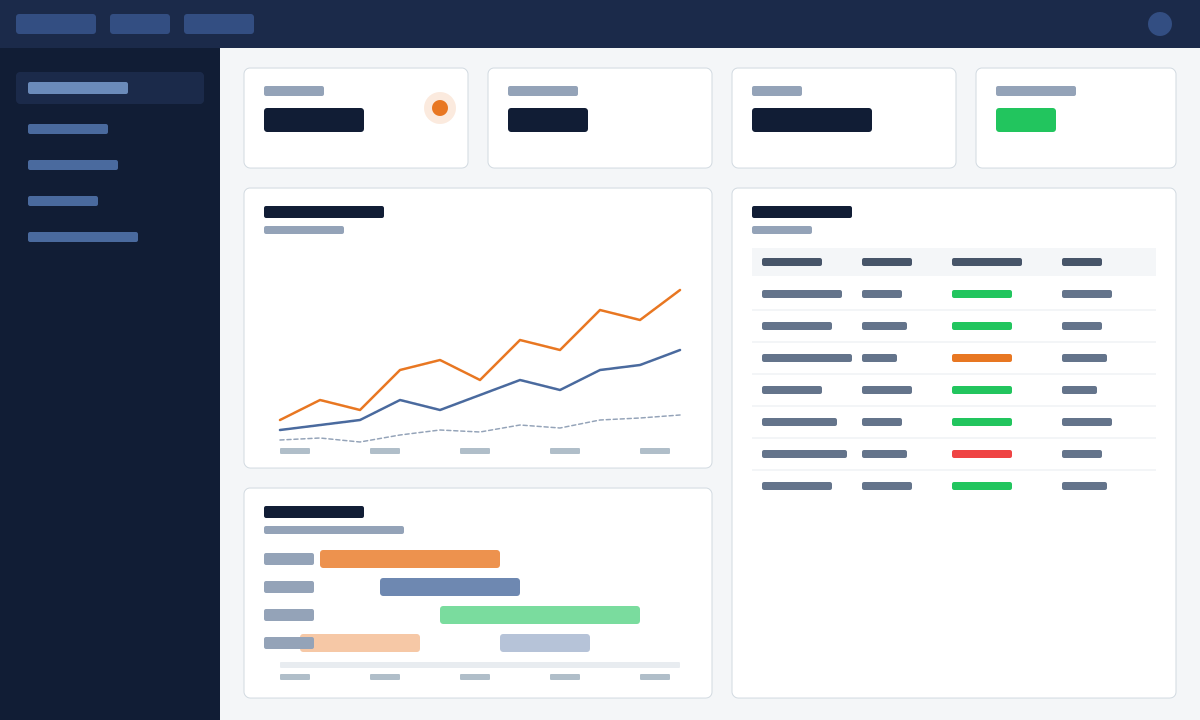
We designed a modular MES platform with two tightly integrated domains: production execution and warehouse management. The production module handles short-term scheduling with the ability to react to disruptions, tracks workstation loads and human/machine resource allocation, and computes efficiency metrics like OEE in real time. The warehouse module manages multi-level storage zones, supports barcode-driven workflows via mobile devices, and automates document generation (goods received, dispatched, internal transfers).
Both modules share a common data layer and integrate bidirectionally with the client’s ERP. Equipment connectivity is handled through standard industrial protocols, feeding live operational data – cycle times, consumable usage, downtime events, and fault codes – directly into the scheduling and analytics engine.
Data pipeline
End-to-end systems integration
The platform acts as the operational backbone connecting shop floor equipment, warehouse infrastructure, and enterprise systems. We built adapters for each machine type and protocol, a unified event bus for cross-domain data flow (production events triggering warehouse operations and vice versa), and a real-time sync layer with the ERP. The result is a single source of truth for what’s being produced, where materials are, and how efficiently the facility operates.
What we built
Production scheduling & optimization
Short-term schedule planning with automatic re-optimization when disruptions occur – machine breakdowns, material shortages, or priority changes propagate through the plan in real time.
Equipment connectivity & data collection
Direct integration with CNC machines, robotic cells, and sensors via standard industrial protocols. Collecting cycle times, consumable usage, downtime events, and fault codes automatically.
OEE & performance analytics
Real-time efficiency metrics (OEE, availability, quality, performance) computed per machine, line, or shift – with drill-down analysis to identify bottlenecks and improvement areas.
Resource & workstation tracking
Visibility into human and machine resource allocation, workstation load balancing, and material requirements at every production stage.
Warehouse & inventory management
Multi-zone, multi-level storage management with real-time inventory tracking, batch and serial number traceability, automated document generation, and low-stock alerts with reorder triggers.
Mobile workflows & barcode scanning
Dedicated mobile application for shop floor and warehouse operators – barcode-driven receiving, locating, picking, and stocktaking workflows that eliminate manual data entry.
ERP integration
Bidirectional data exchange with the existing ERP system – master data sync, production order import, inventory reconciliation, and document flow automation.
Reporting & compliance
Production and warehouse reports with flexible filtering and export to Excel, PDF, and CSV. Full audit trail for material movements, production events, and user actions.
Outcome
The manufacturer gained a unified digital layer over their entire production and logistics operation. Scheduling reacts to real conditions on the floor rather than static plans, material movements are traced from supplier delivery through production to finished goods, and management has live visibility into OEE, resource utilization, and inventory levels – all from a single platform accessible on desktop and mobile.